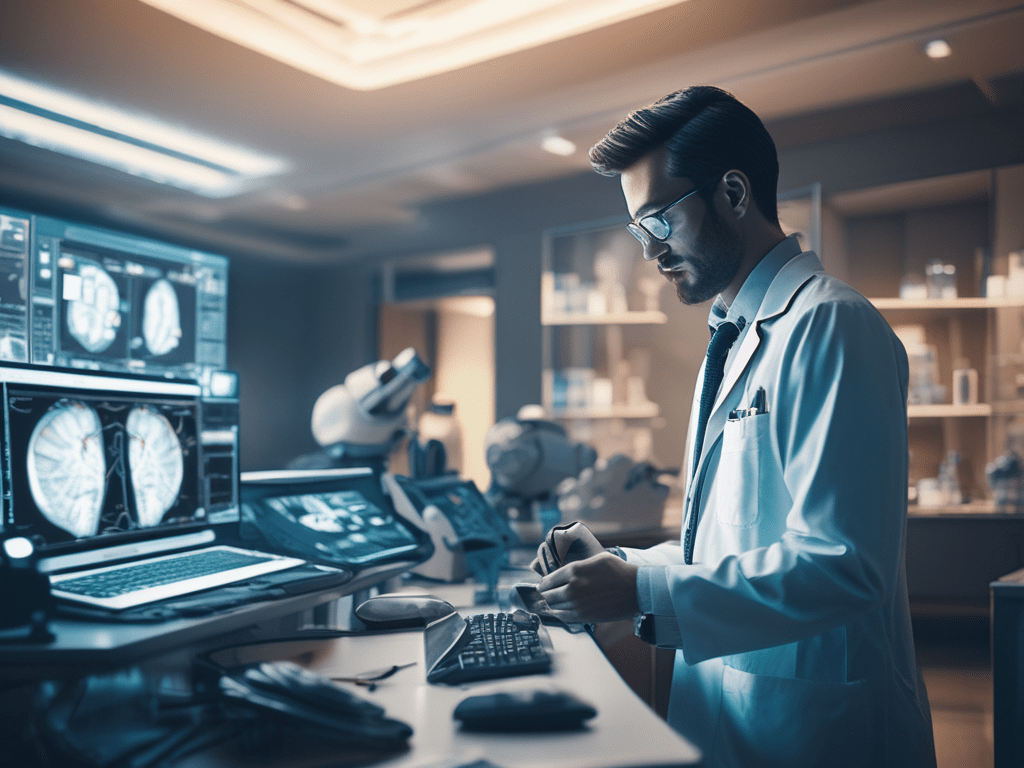
In the evolving landscape of healthcare, artificial intelligence (AI) has emerged as a game-changer, particularly in the realm of differential diagnoses. Differential diagnosis, the process of distinguishing between two or more conditions that share similar signs or symptoms, is a critical and complex task that demands precision, experience, and thorough analysis. This process is vividly depicted in the popular TV show House, M.D., where Dr. Gregory House, a brilliant yet unconventional diagnostician, often encounters medical mysteries that require him to sift through a list of potential diagnoses before arriving at the correct one. Like Dr. House, real-life clinicians must consider various possibilities, testing and ruling out conditions to prevent misdiagnosis and ensure proper treatment.
While the fictional Dr. House relies on his extensive knowledge and intuition, in the real world, doctors now have AI as an additional tool to assist them in this challenging task. With the advent of AI, healthcare providers are equipped with advanced tools that can enhance diagnostic accuracy, reduce human error, and streamline the decision-making process. This blog explores how AI is revolutionizing differential diagnoses and the broader implications for modern medicine, with real-world examples illustrating its impact.
The Role of AI in Differential Diagnosis
AI technologies, particularly those based on machine learning and deep learning, have shown remarkable promise in supporting differential diagnosis. These AI systems are designed to process and analyze vast amounts of data from various sources, including electronic health records (EHRs), medical imaging, laboratory results, and even patient histories. AI can identify patterns in this data that might be too subtle or complex for human clinicians to detect. By doing so, AI not only assists in identifying potential diagnoses but also ranks them based on their likelihood, providing clinicians with a prioritized list of possibilities.
One of the most compelling aspects of AI in differential diagnosis is its capacity to continuously learn and improve over time. As AI systems are exposed to more data and outcomes, they become more proficient at identifying the correct diagnosis, even in cases that are highly unusual or complex. This ability to “learn” from a vast array of medical cases gives AI a distinct advantage, particularly in settings where access to experienced specialists may be limited.
Example: IBM Watson for Oncology IBM’s Watson for Oncology is a prominent example of AI aiding in differential diagnosis. This AI system uses natural language processing and machine learning to analyze a patient’s medical data, including clinical notes, medical history, imaging results, and genetic information. It then compares this data with millions of data points from medical literature and clinical trials to suggest possible cancer diagnoses and treatment options. For instance, Watson can differentiate between different types of lung cancer based on imaging and biopsy data, guiding oncologists toward the most appropriate treatment strategy.
Enhancing Accuracy and Reducing Diagnostic Errors
Diagnostic errors are a significant concern in healthcare, with studies indicating that they affect approximately 12 million Americans annually (Singh, Meyer, & Thomas, 2014). These errors can lead to incorrect treatment, delayed care, and in severe cases, patient harm. AI tools can mitigate these risks by offering a second opinion that is grounded in extensive data analysis.
AI enhances diagnostic accuracy in several ways. First, it reduces the cognitive load on clinicians by rapidly processing and interpreting large volumes of data, which might otherwise take hours or even days to analyze manually. Second, AI can cross-reference current patient data with a vast repository of similar cases, helping to identify diagnoses that may not be immediately apparent. This is particularly valuable in complex cases where multiple conditions might present with overlapping symptoms.
Moreover, AI can help identify and correct cognitive biases that might influence a clinician’s judgment. For instance, anchoring bias, where a clinician might fixate on an initial diagnosis and overlook alternative possibilities, can be countered by AI systems that continually present updated and alternative diagnostic options based on new data.
Example: DeepMind’s AI in Retinopathy Detection DeepMind, a subsidiary of Alphabet, developed an AI system that can detect diabetic retinopathy from retinal images. This condition, if left undiagnosed, can lead to blindness. The AI algorithm, trained on thousands of images, achieved accuracy levels comparable to expert ophthalmologists. By suggesting diabetic retinopathy as a potential diagnosis when it might be overlooked, the AI reduces the likelihood of diagnostic errors and ensures patients receive timely care.
AI Recognizing Rare Conditions
Rare diseases, often referred to as orphan diseases, pose a significant challenge in healthcare due to their low prevalence and the difficulty of diagnosis. Patients with rare diseases often endure a long and frustrating diagnostic journey, with multiple misdiagnoses before the correct condition is identified. AI has the potential to drastically shorten this diagnostic odyssey by recognizing patterns associated with rare conditions that might be missed by human clinicians.
AI systems can be trained on large datasets that include not only common conditions but also rare and atypical presentations of diseases. By doing so, AI becomes capable of generating a broader differential diagnosis list, ensuring that rare but critical conditions are considered early in the diagnostic process. This can be particularly life-saving in cases where early intervention is crucial.
Example: FDNA’s Face2Gene Platform Face2Gene is an AI-powered tool used by geneticists to assist in diagnosing rare genetic disorders. The platform analyzes facial features from a patient’s photograph and matches them with known genetic syndromes. For example, it can help diagnose rare conditions like Cornelia de Lange syndrome, which is characterized by distinctive facial features. This AI tool provides a differential diagnosis list that includes rare syndromes, which may not be immediately considered by clinicians due to their rarity.
Streamlining the Diagnostic Process
The integration of AI in differential diagnosis also contributes to a more streamlined and efficient diagnostic process. By quickly narrowing down potential diagnoses, AI tools enable clinicians to focus their efforts on the most probable conditions, thereby reducing the time to diagnosis and treatment. This efficiency is particularly valuable in emergency settings, where time is a critical factor.
AI’s ability to rapidly process and synthesize data can be a game-changer in fast-paced medical environments such as emergency rooms (ERs) and intensive care units (ICUs). In these settings, AI systems can quickly identify life-threatening conditions that require immediate intervention, ensuring that no time is lost in delivering critical care.
Additionally, AI can assist in reducing unnecessary testing and procedures by providing more accurate initial diagnoses. This not only benefits patients by sparing them from invasive or redundant tests but also reduces healthcare costs and resource utilization.
Example: Aidoc for Radiology Aidoc is an AI tool used in radiology departments to prioritize and analyze medical imaging. In emergency situations, such as when a patient has suffered a stroke, Aidoc can quickly analyze brain scans to identify signs of hemorrhage or ischemia. It then alerts the radiologist, allowing for faster diagnosis and treatment. By streamlining the imaging analysis process, Aidoc helps ensure that critical conditions are diagnosed quickly, reducing the time to intervention.
The Future of AI in Healthcare: A Collaborative Approach
While AI offers immense potential, it is important to emphasize that it is not a replacement for human clinicians. Instead, it should be viewed as a complementary tool that enhances the diagnostic capabilities of healthcare providers. The best outcomes are achieved when AI and human expertise work together, leveraging the strengths of both to improve patient care.
The future of AI in healthcare will likely see even more advanced systems that integrate seamlessly into clinical workflows. These AI systems will not only assist in diagnosis but also in treatment planning, monitoring, and even predicting disease outbreaks. However, the success of these systems depends on their ability to work alongside clinicians, enhancing their decision-making processes without undermining their expertise.
Collaboration between AI and clinicians also involves addressing challenges such as data privacy, the need for transparency in AI decision-making processes, and ensuring that AI tools are accessible to all healthcare providers, regardless of their resources. Additionally, training clinicians to effectively use AI tools will be critical in maximizing the benefits of AI in healthcare.
Example: PathAI in Pathology PathAI is a platform that assists pathologists in diagnosing diseases from tissue samples. For example, in breast cancer diagnostics, PathAI can analyze pathology slides to detect cancerous cells and assess their aggressiveness. While AI provides initial insights, pathologists make the final diagnosis, combining AI-driven data with their expertise. This collaborative approach improves diagnostic accuracy and ensures that AI enhances, rather than replaces, the human element in healthcare.
As AI technology continues to evolve, its integration into healthcare will likely become more seamless and widespread. Future advancements could include more personalized diagnostic tools that take into account individual patient genetics, lifestyle, and environmental factors, further refining the accuracy of differential diagnoses.
AI in Personalized Medicine
Personalized medicine, which tailors medical treatment to the individual characteristics of each patient, is another area where AI is making significant strides. By analyzing a patient’s genetic makeup, AI can suggest the most effective treatments, improving outcomes and reducing the likelihood of adverse reactions.
AI-driven personalized medicine is particularly impactful in oncology, where understanding the genetic profile of a tumor can inform the selection of targeted therapies. Beyond cancer treatment, AI is also being applied to chronic diseases, where it helps identify the most effective treatment plans based on a patient’s unique genetic and lifestyle factors.
Furthermore, AI can aid in predicting patient responses to certain medications, thus helping to avoid adverse drug reactions and increasing the effectiveness of prescribed treatments. This level of personalization was previously unattainable in a clinical setting, but AI makes it increasingly feasible.
Example: Tempus for Personalized Cancer Treatment Tempus is a technology company that uses AI to analyze clinical and molecular data for personalized cancer treatment. For example, Tempus can analyze a patient’s tumor genomics and match the genetic profile with targeted therapies or clinical trials. This personalized approach ensures that the treatment plan is tailored to the patient’s unique genetic makeup, improving the likelihood of successful outcomes. By considering individual variations, AI enhances the precision of differential diagnoses and subsequent treatments.
AI in Emergency Settings
In emergency situations, where rapid diagnosis and treatment are crucial, AI can significantly improve outcomes by quickly processing data and identifying the most likely conditions.
AI systems in emergency settings are designed to operate under the pressure of time constraints, making them invaluable in situations like heart attacks, strokes, and trauma cases. For instance, AI can analyze a patient’s symptoms, history, and real-time data such as vital signs to suggest possible conditions that need immediate attention. This capability allows for quicker decision-making, which is critical in saving lives.
Moreover, AI can assist in triage by evaluating the severity of a patient’s condition, ensuring that those in the most critical need of care are prioritized appropriately. This is especially important in overcrowded emergency departments, where resources must be allocated efficiently.
Example: Viz.ai for Stroke Detection Viz.ai is an AI-powered platform used in emergency settings to detect large vessel occlusions (LVOs) in stroke patients. The AI algorithm analyzes CT scans and alerts neurovascular specialists if an LVO is detected. This rapid identification enables immediate intervention, which is crucial in stroke cases where every minute counts. By assisting in the differential diagnosis of stroke types, Viz.ai helps ensure that patients receive the appropriate treatment as quickly as possible.
AI in Rare Disease Diagnosis
Diagnosing rare diseases, especially in pediatric patients, is a complex and challenging task. AI can help clinicians consider a wider range of possibilities, increasing the likelihood of correctly identifying a rare condition.
AI’s ability to analyze genetic, clinical, and symptomatic data on a massive scale makes it particularly effective in rare disease diagnosis. By cross-referencing a patient’s symptoms and medical history with global databases containing information on rare conditions, AI can suggest possible diagnoses that might not be considered by a clinician due to the rarity of the disease.
Additionally, AI can help identify patterns of symptoms that may not yet be recognized as a known syndrome, potentially leading to the discovery of new rare diseases. This is a promising frontier in medical research, where AI could contribute to expanding our understanding of rare conditions and improving patient outcomes.
Example: PANDA for Pediatric Rare Diseases The Pediatric AI and Rare Diseases (PANDA) initiative focuses on using AI to diagnose rare diseases in children. By analyzing genetic data, medical records, and clinical symptoms, PANDA helps in the differential diagnosis of rare pediatric conditions, such as congenital heart defects or metabolic disorders. For example, if a child presents with symptoms that do not clearly indicate a common disease, PANDA can suggest a range of rare conditions that fit the profile, guiding clinicians towards a more accurate diagnosis.
Conclusion
The application of AI in differential diagnosis is transforming the way healthcare is delivered, offering unprecedented opportunities to improve accuracy, efficiency, and patient outcomes. AI’s ability to process and analyze vast amounts of data rapidly, recognize subtle patterns, and provide evidence-based suggestions makes it an invaluable tool in modern medicine. As illustrated by the examples discussed, AI is already making significant strides in various medical fields, from oncology and radiology to emergency medicine and rare disease diagnosis.
However, it is essential to acknowledge that AI is not without its challenges. Issues such as data privacy, algorithmic transparency, and the potential for over-reliance on AI must be carefully managed. Moreover, the integration of AI into healthcare systems requires substantial investment in infrastructure, education, and training to ensure that both clinicians and AI systems can work together effectively.
The future of AI in healthcare will likely involve even closer collaboration between human clinicians and AI, where the strengths of both are leveraged to provide the best possible care. As AI continues to evolve, it will play an increasingly vital role in diagnosing and treating diseases, ultimately leading to a more personalized, efficient, and effective healthcare system.
In this rapidly advancing field, the thoughtful and ethical deployment of AI will be key to realizing its full potential. By combining the power of AI with the irreplaceable intuition, empathy, and expertise of human clinicians, we can move towards a future where healthcare is more accurate, equitable, and accessible for all.
References
- Campanella, G., Hanna, M. G., Geneslaw, L., Miraflor, A., Werneck Krauss Silva, V., Busam, K. J., … & Fuchs, T. J. (2019). Clinical-grade computational pathology using weakly supervised deep learning on whole slide images. Nature Medicine, 25(8), 1301-1309.
- Esteva, A., Kuprel, B., Novoa, R. A., Ko, J., Swetter, S. M., Blau, H. M., & Thrun, S. (2017). Dermatologist-level classification of skin cancer with deep neural networks. Nature, 542(7639), 115-118.
- Ferrucci, D., Brown, E., Chu-Carroll, J., Fan, J., Gondek, D., & Kalyanpur, A. (2010). Building Watson: An overview of the DeepQA project. AI Magazine, 31(3), 59-79.
- Gahl, W. A., Tifft, C. J., & Wise, A. L. (2016). The undiagnosed diseases program and network: Applications to modern medicine. Genetics in Medicine, 18(4), 399-402.
- Greenspan, H., Van Ginneken, B., & Summers, R. M. (2016). Guest editorial deep learning in medical imaging: Overview and future promise of an exciting new technique. IEEE Transactions on Medical Imaging, 35(5), 1153-1159.
- Gulshan, V., Peng, L., Coram, M., Stumpe, M. C., Wu, D., Narayanaswamy, A., … & Webster, D. R. (2016). Development and validation of a deep learning algorithm for detection of diabetic retinopathy in retinal fundus photographs. JAMA, 316(22), 2402-2410.
- Gurovich, Y., Hanani, Y., Bar, O., Nadav, G., Fleischer, N., Gelbman, D., … & Zisser, G. (2019). Identifying facial phenotypes of genetic disorders using deep learning. Nature Medicine, 25(1), 60-64.
- Johnson, A. E., Pollard, T. J., Shen, L., Lehman, L. W., Feng, M., Ghassemi, M., … & Mark, R. G. (2016). MIMIC-III, a freely accessible critical care database. Scientific Data, 3(1), 1-9.
- Liebeskind, D. S., Sanossian, N., Sapo, M. L., Saver, J. L., Starkman, S., Tsivgoulis, G., … & Alexandrov, A. V. (2020). Viz-AI detection software significantly reduces time to large vessel occlusion thrombectomy. Stroke, 51(5), 1586-1592.
- Marden, J. R., McCune, E. M., Zhao, M., & Short, P. J. (2021). Integration of genetic and genomic approaches for diagnosis of rare pediatric diseases: A parent’s perspective. Journal of Pediatric Genetics, 10(4), 217-223.
- Rajkomar, A., Dean, J., & Kohane, I. (2019). Machine learning in medicine. New England Journal of Medicine, 380(14), 1347-1358.
- Schwarze, K., Buchanan, J., Fermont, J. M., Dreau, H., Snell, K. I., Taylor, J. M., … & Roberts, D. (2020). The complete costs of genome sequencing: A microcosting study in cancer and rare diseases from a single center in the UK. Genetics in Medicine, 22(1), 85-94.
- Shickel, B., Tighe, P. J., Bihorac, A., & Rashidi, P. (2018). Deep EHR: A survey of recent advances in deep learning techniques for electronic health record (EHR) analysis. IEEE Journal of Biomedical and Health Informatics, 22(5), 1589-1604.
- Singh, H., Meyer, A. N. D., & Thomas, E. J. (2014). The frequency of diagnostic errors in outpatient care: Estimations from three large observational studies involving US adult populations. BMJ Quality & Safety, 23(9), 727-731.
- Topol, E. J. (2019). High-performance medicine: The convergence of human and artificial intelligence. Nature Medicine, 25(1), 44-56.
 Azure Advice